Woodlands Gathering seeks to be a safe place for Native Americans and all people to encounter the good news of God!


Woodlands Educational Initiative
Environmental Justice
Care for the earth is not an issue of stewardship, but one of mission. We do not care for the earth because we are superior to it, but because we are part of it, and in its thriving, we find our own. In the western world, in the twenty-first century, we have forgotten what it means to be indigenous - we are all indigenous. Being indigenous means we live in harmony with the earth and all our surroundings. The inhabitability of our planet is more vulnerable now than at any point in recent history. We can, we must make a change in how we see our own lives in relation to the rest of creation. To care for the earth, and all its inhabitants, it is to be an advocate for environmental justice.
Community Garden / Cultivating
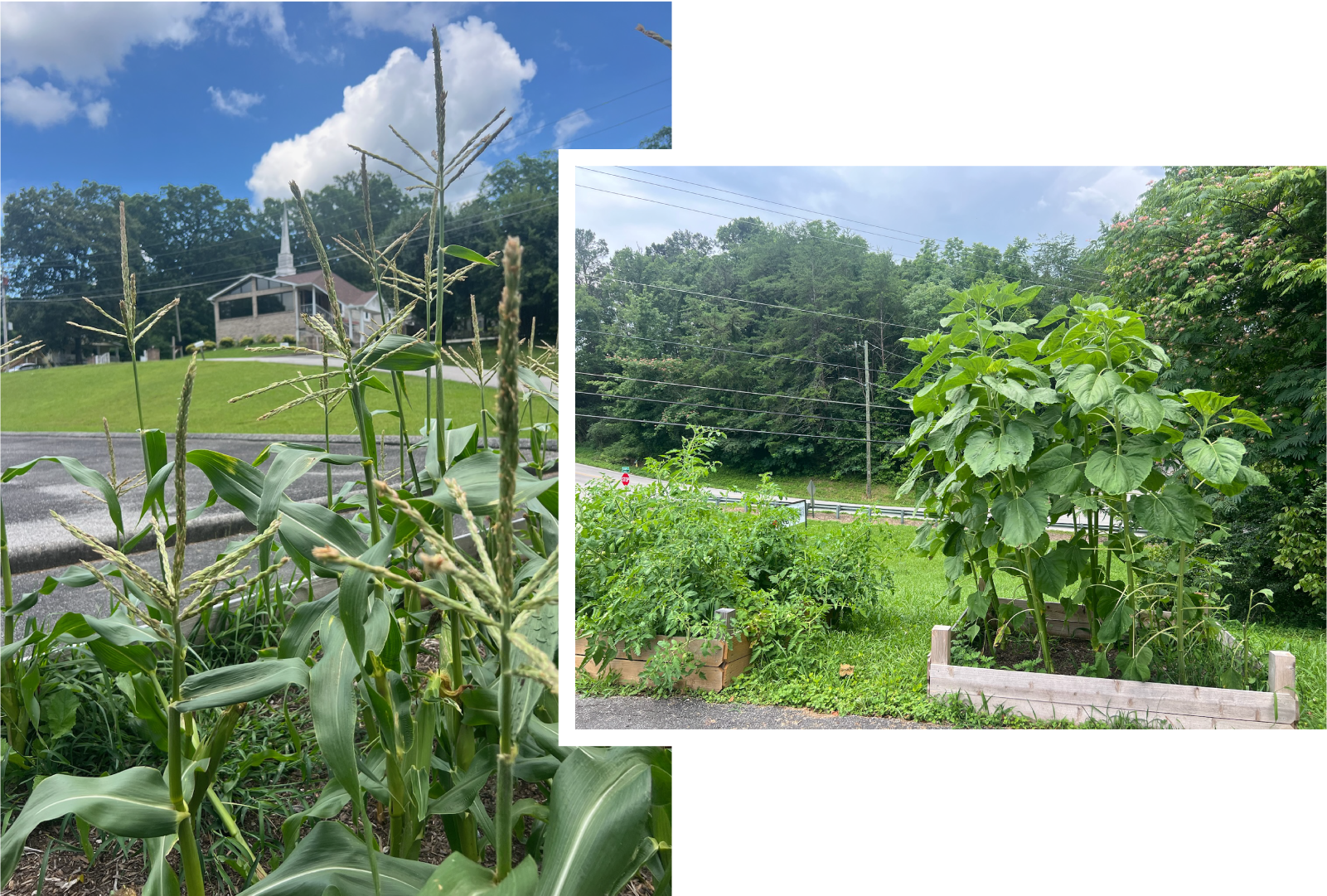
One way that we promote becoming reconnected with the earth is through the living classroom of our community garden. The hillside of 9967 Lovell, is currently the site of ten raised beds, containing the memory of thousands of generations. We grow two different varieties of corn (selu), purple pole beans (tuya) and yellow zucchini squash (wagugi). These three species are instrumental in learning traditional indigenous knowledge (TIK), a wisdom tradition that demonstrates the reciprocal relationships between species and all of life. We believe that reciprocity instead of consumerism offers an opportunity to restore our relationship with creation in a healthy, and holistic way. In addition, we are growing a large variety of fruits and vegetables to make them available to the community as a healthy alternative to the non-perishable items usually available to the under-resourced.
Wild Onion & Egg Breakfast / Foraging
The cultivation of plants is one of many ways of developing a reciprocal relationship with the land. Another way is through responsible foraging. We live in a world of abundance. Most people are unaware of the large varieties of edible plants and herbs available in their own backyard or along roadways. Our annual Wild Onion and Egg Breakfast will teach beginning foragers how to properly identify wild onions (inagei ehi svgi) and prepare them with the traditional Cherokee dish of scrambled eggs.
Seed Preservation Program
In the last century, more than 95% of the world's biodiversity was lost Click Here. Indigenous elders have long taught that every disease has its corresponding plant remedy. By preserving plants through cultivation, ensure that the biodiversity that remains is not lost, and might even succeed in bringing back some previously thought extinct varieties. Woodlands Educational Initiative is working with Eloheh Center for Earth Justice (CLICK HERE) to cultivate, preserve and share indigenous, heirloom seeds that have defined the lifeways of people across the globe for centuries. Preserving these seeds ensures both the food independence of those who cultivate them as well as their overall health and wellbeing.